
Struggling with manual subscription product and service billing and collections? Learn how to start and scale a subscription business in India with this 2026 complete guide. Discover how to automate recurring revenue for newspapers, home kitchens.
Why More Small Businesses Are Moving to Subscription Models
A decade ago, the word "subscription" conjured images of the morning newspaper—a reliable, daily ritual. Today, the term is synonymous with the streaming giants of Silicon Valley. Yet, beneath the veneer of global tech platforms, a quieter, more profound shift is occurring: the rise of Local Commerce-as-a-Service.
Across India, neighborhood businesses are quietly adopting subscription models to create predictable revenue, improve customer retention, and escape the exhaustion of the monthly sales grind. Whether it’s a newspaper vendor delivering to 500 households, a community volunteer managing Community Fund Management, or a home baker juggling WhatsApp orders, the underlying principle is identical: building a recurring relationship that provides value every single day. A subscription business is fundamentally a model where customers pay repeatedly for ongoing access to products or services, allowing owners to move from one-off transactional sales to a steady, predictable stream of revenue.
In neighborhood commerce, nearly 40% of businesses are subscription-like in nature: newspapers, milk, water cans, tiffins, tuition, pet care, and recurring purchases from trusted vendors. Local vendors fulfil these far better than e-commerce players because they control their own inventory and deliver reliably at the doorstep, every single day.
Key Takeaways
- Subscriptions turn unpredictable sales into predictable recurring revenue, the foundation of a stable local business.
- Getting started means picking a model, pricing it right, understanding GST basics, and setting up reliable payment collection.
- Retention beats acquisition: renewal reminders, failed payment follow ups, and consistent service keep churn low.
- Track five numbers: subscriber count, collection rate, churn rate, revenue per subscriber, and outstanding dues.
- Zopnote, India’s LocalCommerce-as-a-Service platform, automates the entire cycle with zero commission.
The Real Shift: Predictable Revenue
Imagine two businesses. The first is a neighborhood bakery; every month begins at zero. The owner spends every waking hour chasing walk-in traffic, hoping the day's sales cover the rent. Revenue is volatile, and planning is an exercise in guesswork.
Now, imagine a home kitchen with 300 active subscribers receiving meals every weekday. Before the month even begins, the owner has visibility into their primary revenue stream. This isn't just about cash flow; it’s about the stability required to grow. Predictable revenue is the hallmark of a healthy subscription business, allowing entrepreneurs to forecast expenses, manage inventory efficiently, and invest in sustainable long-term growth rather than daily survival.
The Evolution of Local Commerce
While subscriptions feel modern, the model is as old as the local milkman. The difference today is not the model—it’s the technology. We have moved from physical diaries and manual Newspaper Billing to sophisticated Local Business Software that simplifies Subscription Management.
Three major shifts are accelerating this transition. Digital adoption through the ubiquity of UPI has effectively killed the friction of cash collections. Meanwhile, consumer expectations have shifted toward Proximity Commerce—modern customers want fresh, local, and convenient without the manual effort of reordering. Finally, community values are driving people to choose neighbors, farms, and home-based kitchens, fueling the rise of Community Commerce.
Scaling Without Losing Touch: The Operational Reality
The most successful subscription businesses—whether Farm Direct operations or specialized WhatsApp Order Management services—eventually face a ceiling. Spreadsheets are excellent for ten customers, but they are a liability for one hundred.
When you lose track of who paid, who renewed, and who needs a reminder, you stop being a business owner and start being an administrator. Order Management and Billing Software aren't just technical tools; they are the infrastructure that enables Customer Ownership. If you are still relying on notebooks, you are likely leaving revenue on the table.
Step 1: Choose Your Subscription Model
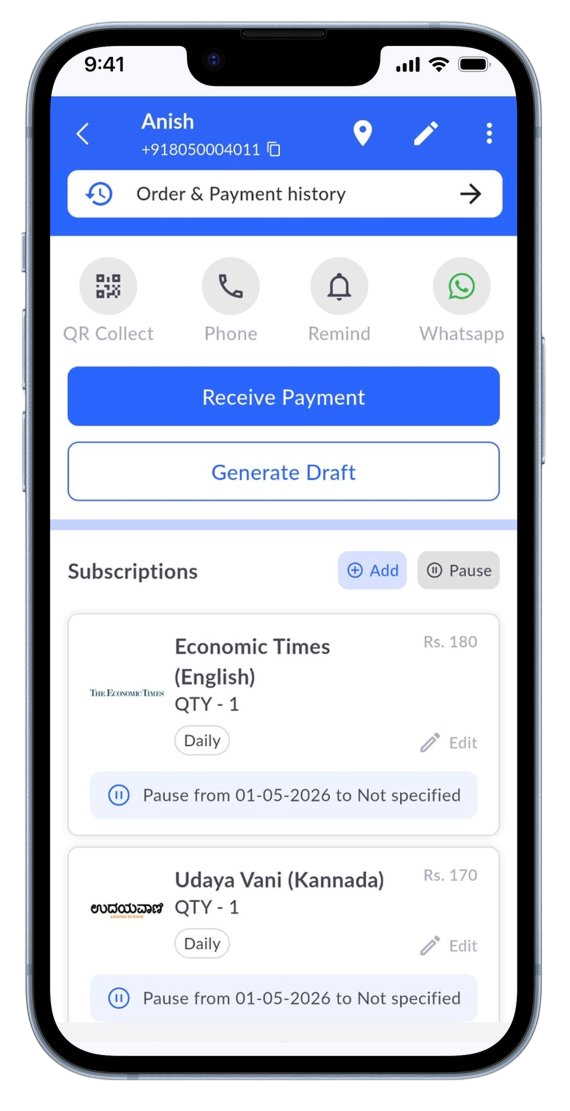
Subscription businesses in India generally follow one of four models. Daily delivery models suit newspapers, milk, and tiffins, where the product arrives every morning and billing settles monthly. Weekly cycle models fit farm produce boxes and water can routes. Monthly service models cover tuition centres, pet grooming, and society maintenance. And community models handle club memberships and association fees, where many members pay toward a shared service.
Pick the model your customers already live by. A subscription should formalize an existing habit, not invent a new one. The morning newspaper works as a subscription because the habit came first.
Step 2: Price Your Subscription Right
Pricing a subscription is different from pricing a product, because you are pricing a relationship. Three rules help local businesses get it right.
Anchor to the monthly bill, not the unit price. Customers evaluate "₹600 a month for milk", not "₹30 a packet". Keep the monthly number round, predictable, and easy to compare with alternatives.
Build in flexibility without breaking billing. Vacation holds, skipped days, and quantity changes are the norm in local subscriptions. Your price must survive them, which means your billing system must prorate them automatically. Manual proration is where most billing disputes are born.
Reward commitment, not just volume. A small discount for quarterly prepayment improves cash flow and cuts collection effort by two-thirds. That trade is almost always worth it.
Step 3: Understand GST and Compliance Basics
Most small subscription vendors start below the GST threshold, which is ₹40 lakh annual turnover for goods and ₹20 lakh for services in most states. Below the threshold, you can operate without GST registration, though you may register voluntarily if your customers need GST invoices.
Once you cross the threshold, or if you serve businesses and societies that demand tax invoices, you will need GST registration, GST-compliant invoices, and periodic returns. Digital billing makes this dramatically easier: every bill, receipt, and payment is already recorded, so your accountant works from clean data instead of a shoebox of notes. This is general information rather than tax advice, so confirm your specific situation with a tax professional.
Step 4: Set Up Payment Collection That Actually Works
Collection is where subscription businesses win or lose. Billed revenue means nothing until it is collected, and manual collection is the single largest source of revenue leakage for local businesses.
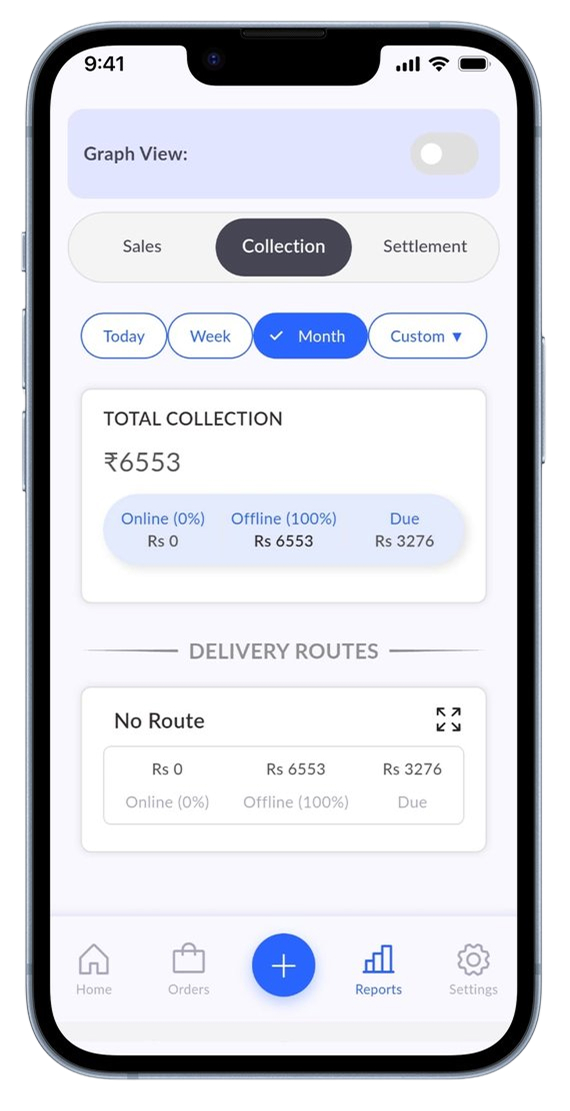
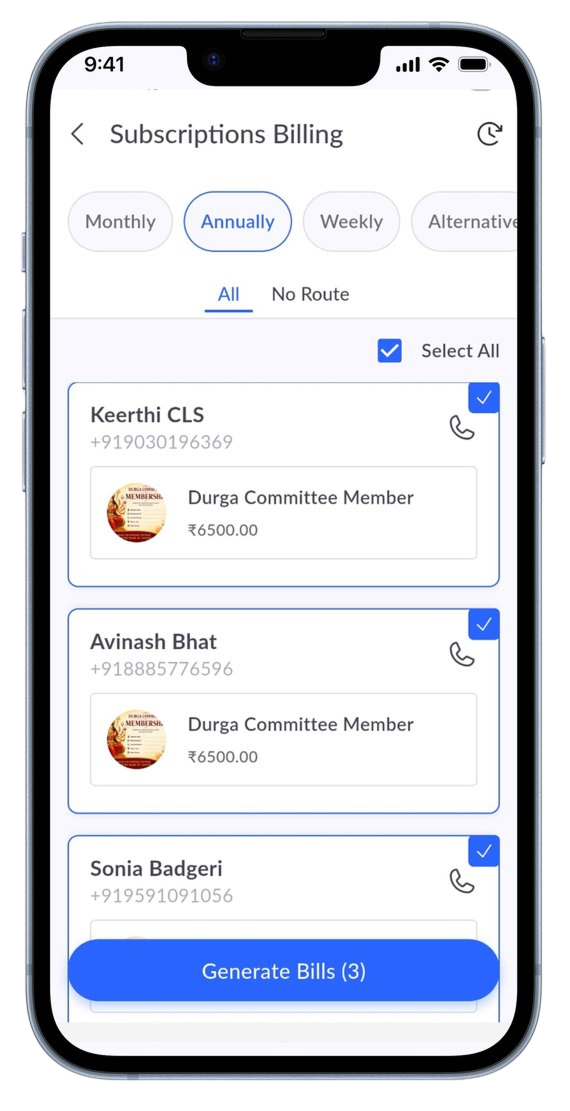
A working collection setup has four parts. First, automated bill generation at the end of every cycle, adjusted for skips and holds. Second, a payment link or UPI option delivered with the bill, so paying takes one tap. Third, automatic reconciliation, so a payment marks the right bill as settled without you matching screenshots. Fourth, a live dues dashboard showing exactly who owes what, so follow up is targeted instead of blanket.
Step 5: Handle Renewals and Failed Payments Gracefully
Every subscription has two fragile moments: renewal and payment failure. Most churn happens silently at these moments, not through angry cancellations.
For renewals, remind before the cycle ends, not after. A polite automated message two or three days before renewal keeps the decision effortless. For missed or failed payments, follow up within days with a payment link, and track the balance so it never silently accumulates into an amount that embarrasses the customer into leaving. The tone matters: a reminder from a system feels professional, while a personal chase in a WhatsApp group feels awkward for both sides.
Step 6: Track the Metrics That Matter
You cannot improve what you do not measure. Five numbers tell you almost everything about a local subscription business.
| Metric | What It Tells You | Healthy Signal |
|---|---|---|
| Subscriber count | Overall growth trajectory | Steady net additions every month |
| Collection rate | How much billed revenue you actually receive | 95% or higher within the cycle |
| Churn rate | How many subscribers you lose per month | Under 3-5% monthly |
| Revenue per subscriber | Whether customers are growing in value | Rising via add-ons and upgrades |
| Outstanding dues | Money earned but not yet collected | Falling month over month |
On a platform like Zopnote these numbers come from your daily operations automatically, so reviewing them takes minutes, not a weekend of spreadsheet work.
The Retention Formula: Consistency, Communication, Convenience
Most subscription businesses fail not because they cannot acquire subscribers, but because they cannot retain them. The goal is to build a relationship commerce model where the subscriber feels like part of a community. Retention is the engine of subscription growth. By maintaining consistent service quality, communicating clearly about billing cycles, and offering the convenience of automated payments, businesses reduce churn significantly. Successful retention depends on treating every subscriber as a long-term asset, not a one-time transaction.
Frequently Asked Questions
What is a subscription business?
A subscription business generates recurring revenue by charging customers at regular intervals for ongoing products or services.
Which local businesses can use subscriptions?
Newspaper vendors, milk vendors, apartment associations, clubs, home kitchens, meal services, tuition centres, water can suppliers, pet services, farm sellers, and many other recurring-service businesses.
Do subscription businesses in India need GST registration?
Generally only once annual turnover crosses the threshold (₹40 lakh for goods, ₹20 lakh for services in most states). Many small vendors operate below it; confirm your case with a tax professional.
What happens when a payment fails or is missed?
Follow up quickly with a polite automated reminder, offer an easy payment link, and track dues so the balance never silently accumulates.
Why are subscriptions becoming more popular?
Because they provide predictable revenue, improve customer retention, and create stronger business stability.
What is churn?
Churn is the percentage of subscribers who stop using a service over a given period.
Why do customers cancel subscriptions?
The most common reasons are poor communication, inconsistent service, billing issues, and lack of perceived value.
How can businesses improve retention?
By delivering consistent service, communicating regularly, and making payments easy.
What is the biggest challenge for subscription businesses?
Managing recurring billing and collections efficiently as subscriber counts grow.
Do small businesses need subscription management software?
Not immediately. But once manual processes begin creating errors or consuming significant time, software becomes valuable.
What metrics should subscription businesses track?
Subscriber count, collection rate, churn rate, revenue per subscriber, and outstanding dues.
Why is collection rate important?
Because billed revenue only becomes useful when it's actually collected.
Conclusion: Building for the Future
The future of recurring local commerce belongs to those who systemize their relationships. By leveraging LocalCommerce-as-a-Service, businesses can reclaim their time and focus on what matters most: serving their community. Whether you are scaling a home kitchen or managing complex community collections, the right systems don't just organize your data, they empower your growth.
Local businesses need affordable, easily accessible digital tools without giving up a commission on every sale. That is exactly what Zopnote was built for.
Ready to Build a Subscription Business That Scales?
Stop managing recurring customers through notebooks, spreadsheets, and scattered WhatsApp messages. Automate billing, improve collections, and build predictable recurring revenue with Zopnote.
Book a Free Demo Try Zopnote With Your First 100 Customers