
Did you know manual billing errors could be costing you 5-10% of your revenue? From newspaper vendors in Delhi to home bakers in Mumbai, local Indian businesses are discovering how Billing Software can stop revenue leakage and make scaling easy.
Key Takeaways
- Revenue leakage is money you earned but never collected, and it typically costs local businesses 5 to 10% of revenue.
- It hides in missed renewals, unreconciled UPI payments, forgotten follow ups, and outdated customer records.
- The fix is not more effort, it is infrastructure: automated billing, reminders, and reconciliation on a platform like Zopnote, India’s LocalCommerce-as-a-Service platform.
The Most Expensive Leak in a Small Business Isn't What You Think
If you ask a neighborhood business owner about their biggest challenge, the conversation usually centers on finding customers or increasing sales. Rarely does anyone mention revenue leakage. Yet, for thousands of entrepreneurs in the Local Commerce sector, this silent tax on growth is more damaging than rising costs. Whether you are a newspaper vendor in Delhi managing five hundred morning deliveries or a home baker in Mumbai juggling custom weekend orders, the problem remains the same: you are generating revenue, but are you actually collecting all of it?
The Problem Nobody Sees Until It's Too Late
Unlike declining sales, revenue leakage doesn't announce itself with a crisis; it happens quietly through a missed payment here and a forgotten follow-up there. Individually, an outdated customer record or a billing error seems insignificant. Collectively, these small slips erode your profitability month after month. The most dangerous part is that without a dedicated Subscription Management system, most business owners don't even know it's happening until they realize their bank balance doesn't match their hard work.
How Local Businesses Accidentally Lose Money
For decades, Proximity Commerce in India operated on pure trust. Relationships mattered more than systems, and informal records were the norm. This worked fine when things were small, but growth changes the math. Twenty customers can be managed through memory, but two hundred cannot. As customer numbers increase, operational complexity grows exponentially. Suddenly, businesses are forced to juggle Recurring Billing, delivery schedules, and constant customer communication across fragmented channels.
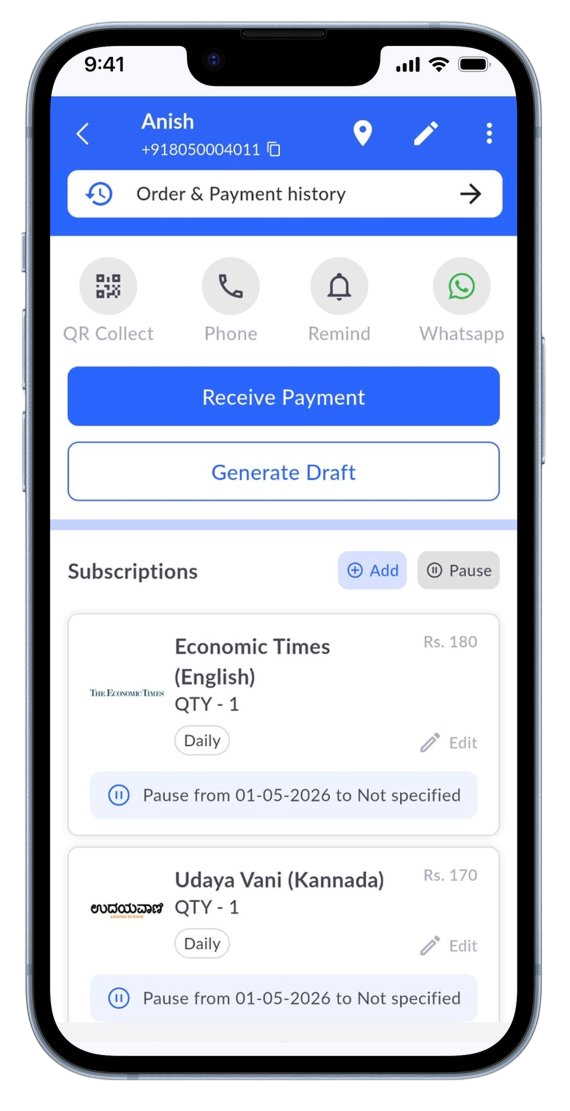
- For Newspaper Vendors: Manually tracking 300+ subscriptions makes it impossible to know who paused service for a vacation or who made a partial UPI payment.
- For Home Bakers: Coordinating orders across WhatsApp Order Management and Instagram leads to missed deadlines and the dreaded "forgotten invoice."
- For Tutors & Coaches: Spending hours chasing monthly fee payments instead of focusing on teaching students.
- For Milk Vendors & Water Can Suppliers: Daily deliveries with monthly settlement mean one unrecorded skip or extra can per customer silently erodes the bill.
- For Pet Services & Subscription Providers: Renewals slip through when there is no system reminding either side that the cycle has ended.
Why does manual billing fail at scale? Because every crack in your process represents potential revenue loss. Without a centralized Order Management system, your growth actually becomes your biggest liability.
The Newspaper Vendor's Invisible Problem
Consider a newspaper vendor delivering to 600 homes. The hard part isn't the 4:00 AM distribution; it's the end-of-month collections. They must reconcile who moved, who paused, which payments were cash, and which were UPI. The result of this complexity isn't usually fraud—it's expensive confusion. When businesses fail to reclaim Customer Ownership through digital records, they essentially let their profits walk out the door.
What Leakage Actually Looks Like: Three Real Scenarios
The milk vendor losing ₹5,000 a month. A vendor delivering to 250 homes settles bills monthly from a notebook. A few customers pause for a week, a few take an extra packet on weekends, and a few UPI payments arrive without names. By month end, roughly ₹5,000 of delivered milk is never billed or never collected. That is ₹60,000 a year, gone without a single "lost" customer.
The newspaper vendor missing renewals. Out of 500 subscribers, 15 to 20 lapse quietly every month: someone moves, someone forgets to pay, someone's vacation hold never gets lifted. Without renewal reminders, the vendor keeps delivering to some and stops billing others, leaking revenue in both directions.
The home kitchen forgetting repeat orders. A tiffin service manages 80 customers across three WhatsApp groups. A regular customer's weekly order gets buried under 200 messages, the meal never goes out, and the customer quietly switches providers. The leak here is not just one bill, it is the entire future value of a repeat customer.
Why Revenue Leakage Compounds Over Time
A business losing ₹500 today might not sound alarming, but repeated weekly over five years, it becomes a financial disaster. Revenue leakage compounds just like interest. If 5% of your revenue goes uncollected due to manual inefficiencies, that's ₹60,000 every year for a small business generating ₹1 lakh a month. This is money that should have been reinvested into your growth.
The root causes are almost always the same: manual bookkeeping, subscription billing errors, and missing UPI payment reconciliations.
The WhatsApp Economy Has Created New Challenges
In India, we largely operate in a "WhatsApp Economy." While these platforms are great for engagement, they aren't built for financial rigor. Managing 50 different order chats is like flying blind. Transitioning to a Local Commerce-as-a-Service model allows you to professionalize these interactions, ensuring that every order is tracked and every payment is secured.
Why Community Businesses Face a Different Version of the Same Problem
Apartment associations and Community Commerce organizations face a unique version of this struggle. For them, transparency is as vital as the collections themselves. Residents want visibility into how their maintenance fees are managed. When records are fragmented across notebooks and messaging apps, trust suffers. Professionalizing these communities requires robust infrastructure that treats residents as valued stakeholders.
The Real Cost of Manual Billing Isn't Time
The true cost of manual billing isn't just the hours spent; it's the uncertainty. Business owners operating without data cannot confidently say how much revenue is outstanding or which percentage of invoices were collected. Without this visibility, decision-making becomes reactive. Investing in systems allows you to move from making expensive assumptions to making informed strategic choices.
Why Growth Exposes Operational Weaknesses
Growth doesn't create operational weaknesses; it reveals them. A home kitchen with 20 customers can survive on informal systems, but a kitchen with 200 will buckle under the pressure. The businesses that scale successfully are those that recognize this transition early, trading their reliance on memory for a reliance on systems.
The Shift From Transactions to Relationships
Revenue in local commerce comes from recurring relationships, not isolated transactions. A newspaper subscription or a weekly vegetable delivery is an act of trust repeated every week. When you automate collections, you aren't just tracking money; you are protecting those relationships. Systems ensure that your customers receive professional service, which in turn creates the recurring revenue that stabilizes your business.
Automated Billing: Plugging the Leak
Using Zopnote, India’s LocalCommerce-as-a-Service platform, allows you to:
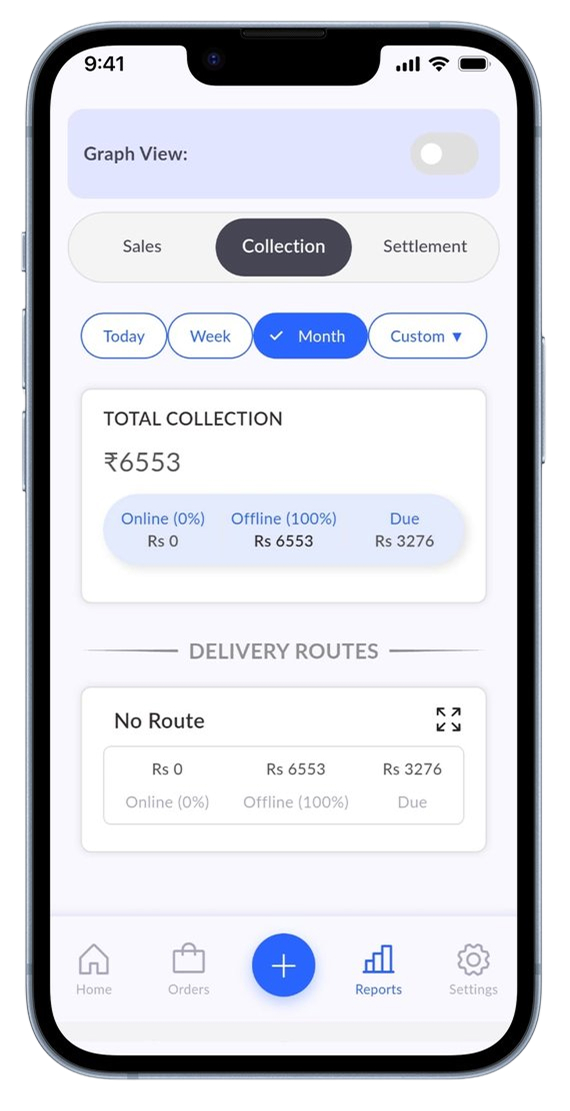
- Collect payments faster: automated billing cycles and reminders mean you never manually send a 'payment due' message again.
- Reduce missed collections: UPI payments reconcile against bills automatically, so nothing slips through.
- Save 2 to 3 hours daily: orders, customer records, and dues live on a single dashboard instead of notebooks and chat threads.
- Build trust and retention: professional digital invoices and receipts increase customer confidence and repeat business.
Why Local Commerce Needs Better Infrastructure
For years, local businesses have been forced to stitch together multiple tools.
One app for payments.
Another for communication.
Another for bookkeeping.
Another for orders.
The result is fragmentation.
What local commerce increasingly needs is infrastructure designed specifically for recurring neighborhood relationships.
Not enterprise software.
Not marketplace software.
Local commerce software.
Tools designed around the realities of newspaper vendors, community organizations, home businesses, and farm-direct sellers.
Because their challenges are unique.
And their opportunities are enormous.
Frequently Asked Questions
What is revenue leakage?
Revenue leakage is money a business has earned but never collects, usually because of missed payments, billing errors, forgotten follow ups, or unreconciled UPI transactions.
How much revenue do small businesses lose to manual billing?
Manual billing errors and missed collections typically cost local businesses 5 to 10% of revenue, and the loss compounds month after month.
How can local businesses stop revenue leakage?
By moving from notebooks and WhatsApp threads to automated billing software that tracks subscriptions, sends payment reminders, and reconciles UPI payments automatically.
Conclusion
To thrive in 2026, local businesses in India must bridge the gap between their neighborhood charm and modern digital efficiency. Plugging revenue leaks is the first step toward reclaiming your time and securing your profits. If your leaks come from subscription customers, our subscription business guide goes deeper, and if orders are getting lost in chats, read why WhatsApp alone can't run a home business.
Stop the Leak. Start Collecting Everything You Earn.
Automate billing, reminders, and UPI reconciliation with Zopnote. Improve cash flow from your very first month, with zero commission.
Book a Free Demo Start Digitizing Your Business Today